Dual Script System
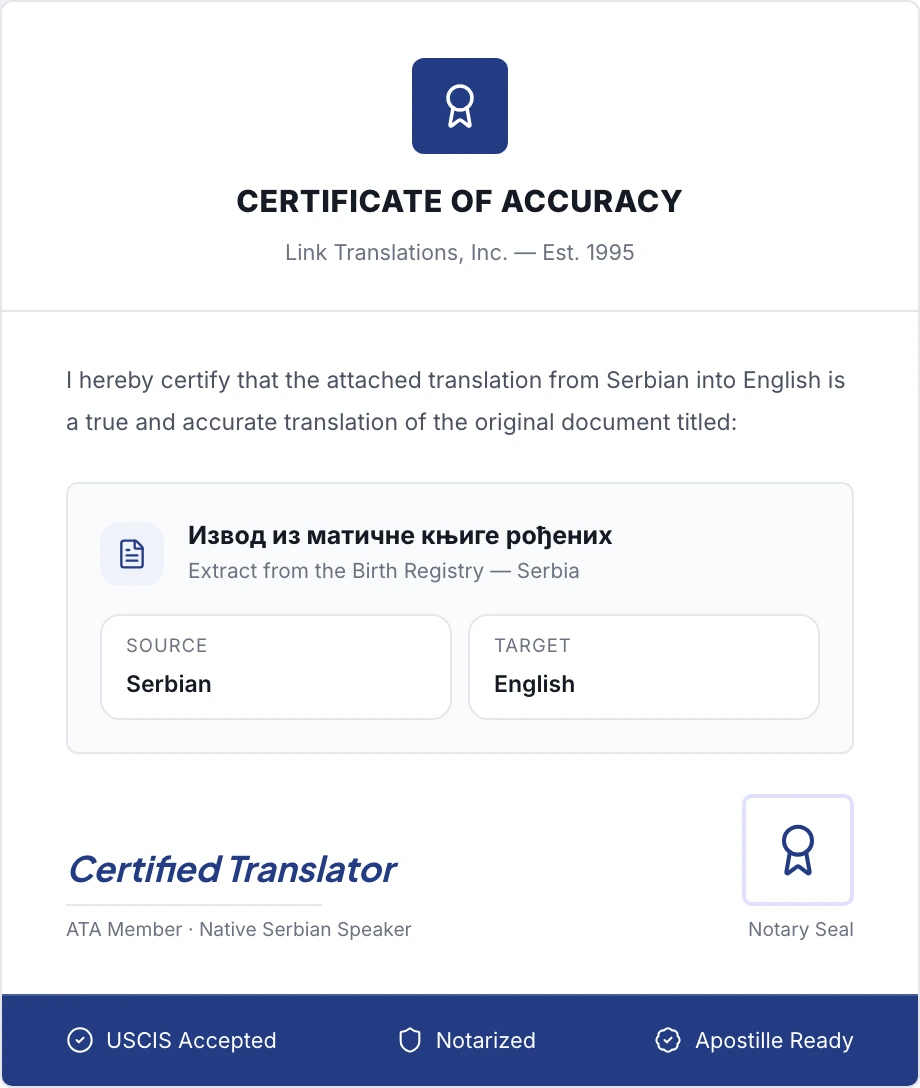
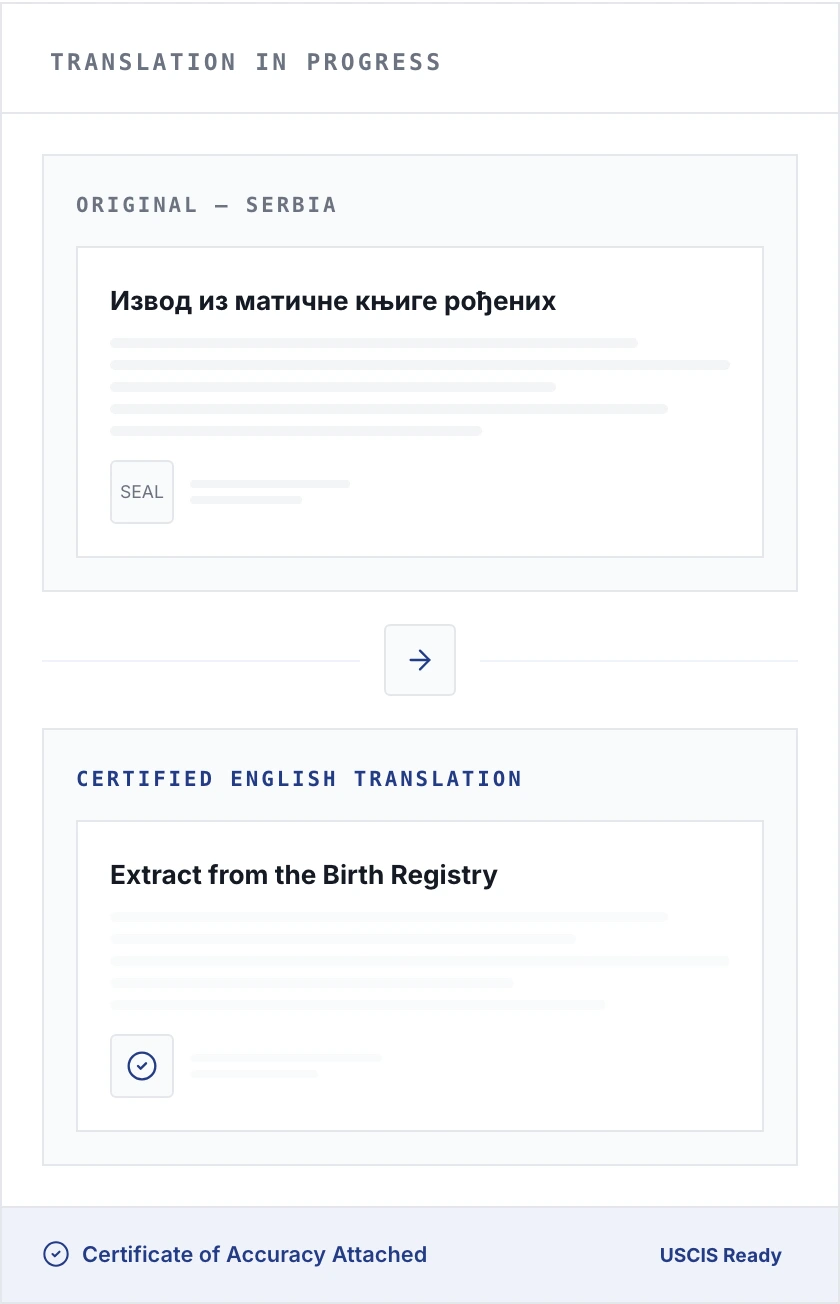
Serbian is officially written in both Cyrillic (Ћирилица) and Latin (Latinica) scripts. Documents may use either or both — sometimes switching scripts within the same document. Translators must be equally proficient in reading both systems.
Post-Yugoslav Document Complexity
Documents may originate from Serbia, the Republika Srpska entity of Bosnia, Montenegro, or the former Yugoslavia (SFRJ/SRJ). Each entity uses different formats and issuing authorities, and historical documents may bear stamps from defunct states.
Case System with Seven Cases
Serbian has seven grammatical cases that change word endings throughout a sentence. Names change form depending on their grammatical role — "Petrović" becomes "Petrovića" in genitive. Translators must identify base forms for accurate name rendering.
Mutual Intelligibility Challenges
Serbian, Croatian, Bosnian, and Montenegrin are mutually intelligible but use different standard vocabularies and sometimes scripts. Documents from mixed regions may blend standards, requiring translators who understand all four national varieties.