
Software & Website Localization
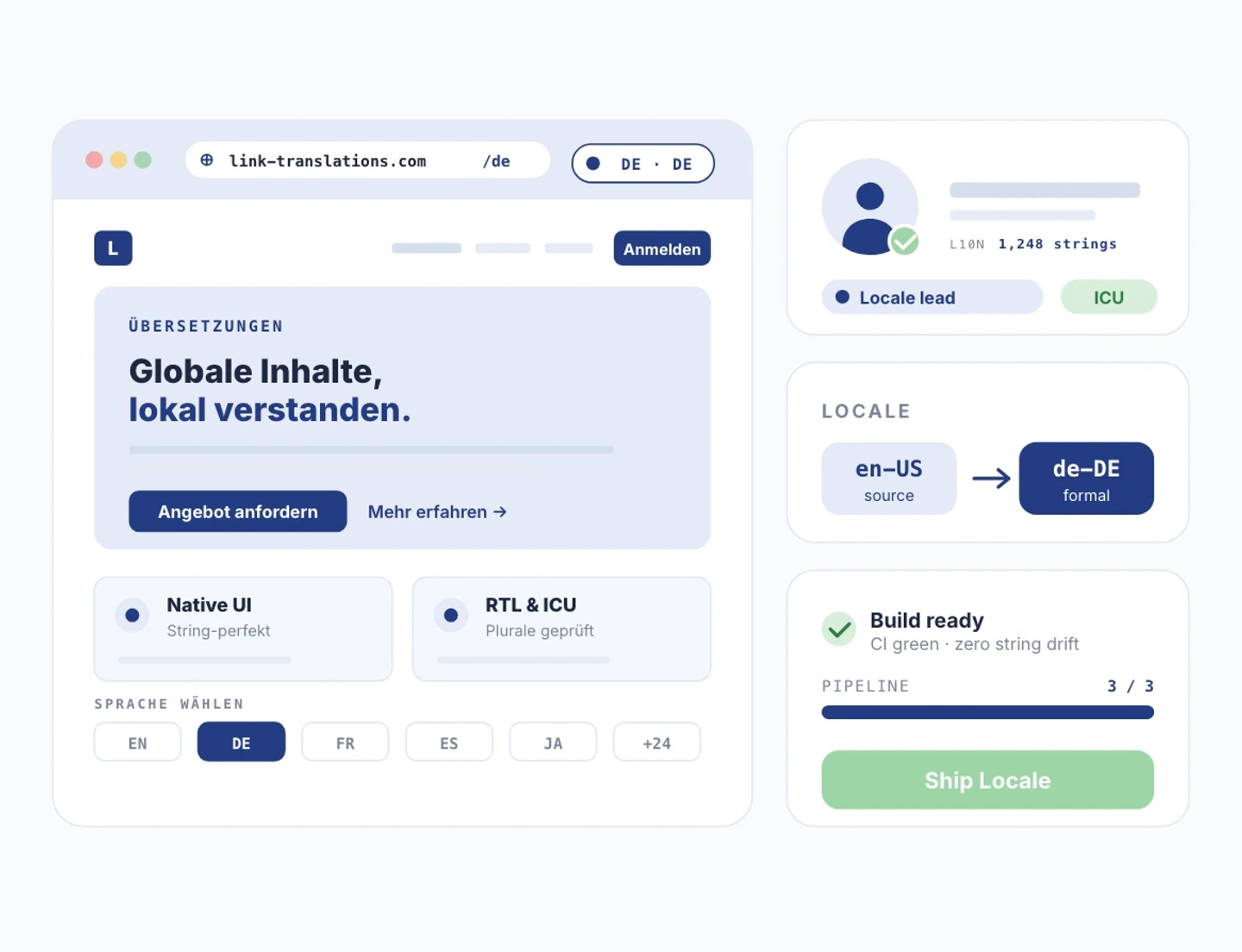
We localize your website, app, or software for global markets — adapting UI strings, content, SEO metadata, and user flows for native-feeling experiences.
Why localization is harder than translation
Every platform has unique localization pitfalls. We’ve handled them all.
Text expansion breaks UI
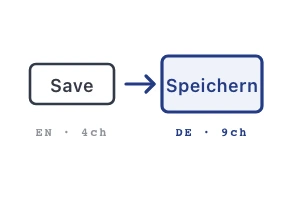
German runs ~30% longer than English; French and Spanish expand similarly. Buttons, navs, and tables silently break unless layouts are tested at every locale.
String context drift
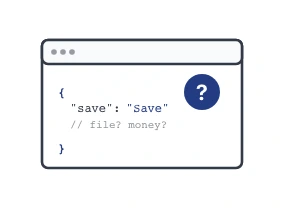
A bare “Save” can mean save-a-file or save-money. Without context screenshots and developer notes, translators guess — and guesses ship.
RTL & format pitfalls
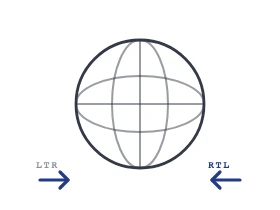
Arabic and Hebrew flip the entire interface. Date, currency, and number formats vary by locale. Missed adaptation reads as foreign — not local.
Why localization is the whole growth lever
English unlocks 27% of the internet.
The other 73% browses, buys, and converts in their own language. Localization is no longer a finishing touch — it’s the difference between an addressable market and a bounce.
- 013× more likely to buyWhen content is in the buyer’s native language
- 022× longer sessionsVs. machine-translated alternatives
- 03Hreflang done rightOr you compete with yourself in Google
- 04Local payment & currencyCart abandonment falls when prices are familiar
Native-feeling, continuous by design.
Native linguists, translation memory, and API-driven workflows — every release ships in every locale without manual chasing.
- ATranslation memory & termbaseUpdates priced against TM matches
- BVisual & RTL QAEvery locale checked for layout integrity
From audit to shipped locale
From content audit to deployment — a workflow built for accuracy and speed.
Content audit
Translatable strings extracted; embedded text in images, locale-specific date/number formats, and hardcoded strings flagged.

Native linguist
Native speakers paired with front-end and UX awareness — they know a German button needs 30% more room.
Translate & adapt
Beyond word-for-word — colors, imagery, idioms, dates, and currency adapted so the product reads as local, not translated.
Visual QA
Each localized page reviewed for text overflow, broken layouts, truncated buttons, and RTL rendering — what automated tools miss.

Deployment
Production-ready files in your format — JSON, XLIFF, PO, .strings, .resx, ARB — or direct CMS integration. TM keeps updates cheap.
Every surface — every locale
From websites and mobile apps to enterprise SaaS — we handle the full spectrum.

Web & e-commerce
Marketing sites, CMS-driven content, and storefronts — SEO metadata and hreflang adapted per market alongside the copy.
- Website content & CMS
- E-commerce stores
- Marketing landing pages
- Email templates

Software & SaaS
UI strings, in-app notifications, and SaaS dashboards — placeholders and ICU MessageFormat preserved across every export.
- SaaS platforms
- Mobile applications
- UI strings & labels
- In-app notifications

Docs & support
Help centers, API references, and knowledge bases — terminology locked across versions through translation memory.
- Help centers & FAQs
- API documentation
- Knowledge bases
- Game interfaces
01Which file formats and frameworks do you support?
JSON, XLIFF, PO/POT, .strings, .resx, ARB, YAML, CSV — and direct integrations with WordPress, Shopify, Drupal, Contentful, Strapi, and most headless CMSes. Placeholders, ICU MessageFormat, and HTML are preserved end-to-end.
02How do you keep terminology consistent across releases?
Every account gets a translation memory and a termbase. New strings are pre-translated against TM matches, so updates ship faster and cheaper, and product terminology stays consistent across versions and channels.
03Do you handle SEO and hreflang for localized sites?
Yes. Meta titles, descriptions, slugs, alt text, and hreflang attributes are localized per market. We work with your SEO team on keyword research per locale so translated pages compete with local-language competitors, not just sit there.
04How do you handle visual QA and RTL languages?
Translated UI is reviewed in context — staging URLs, screenshots, or device builds — for text overflow, broken layouts, and truncated buttons. RTL locales are tested for full mirroring including icons, navigation, and bidi text.
05What turnaround can we expect?
Turnaround depends on volume. Small string files typically ship in 2–4 business days; mid-size SaaS or marketing sites in 5–10 business days. Larger or continuous projects ship on a daily or weekly cadence.
Send the files. We will map the cleanest path.
Project quotes return within the hour. Localization projects are matched by product surface, locale, format, and review needs before work begins.