The adoption home study is one of the most important steps in any domestic or international adoption. It's a comprehensive evaluation of the prospective adoptive family, and it requires extensive documentation. When any of those documents originate in a foreign language, they must be professionally translated. A certified translation ensures that your home study agency, adoption agency, and the court can review every document accurately.
What Is the Home Study?
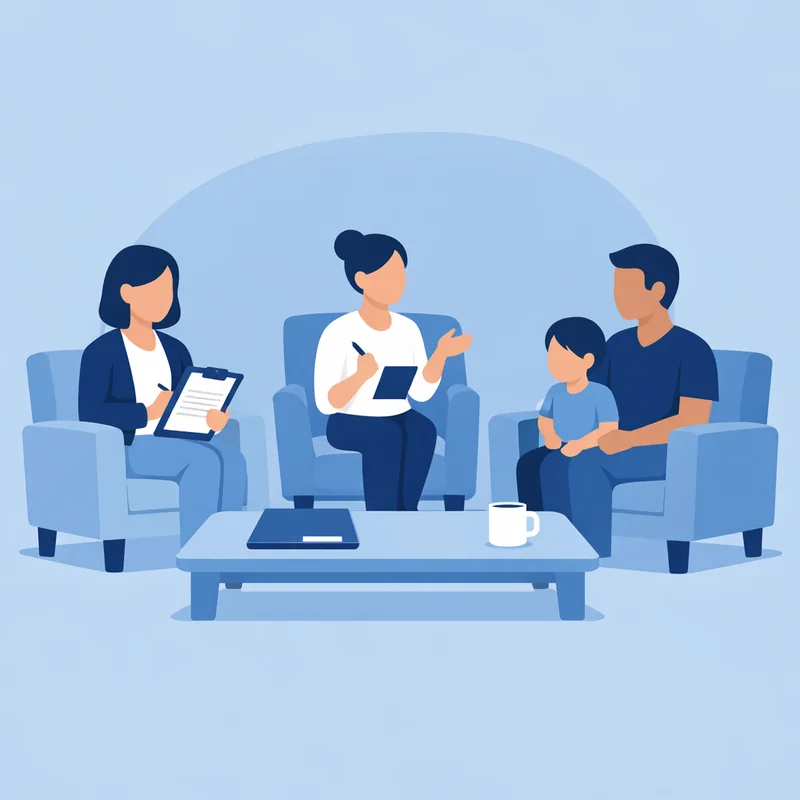
The home study is a process conducted by a licensed social worker or home study agency. It evaluates whether a family is suitable to adopt a child. The home study includes:
Background checks — Criminal history, child abuse registry checks
Financial review — Income verification, employment history, tax returns
Medical evaluations — Physical exams for all household members
Interviews — Individual and family interviews with a social worker
Home inspection — Safety and living environment evaluation
Reference letters — Personal and professional references
Autobiographical statements — Personal history narratives
Documentation — Supporting documents proving identity, status, and stability
The completed home study report is submitted to the court (for domestic adoption) or to USCIS and the foreign country (for international adoption).
Documents That Commonly Require Translation
Identity Documents
Birth certificates — Every household member's birth certificate: Prospective adoptive parents, Any existing children in the home, and Other household members
Marriage certificates — Current marriage, plus documentation of any prior marriages and divorces
Divorce decrees — If either prospective parent was previously married, the full divorce decree must be translated
Death certificates — If a prior spouse is deceased
Passports and national ID cards — Sometimes required for international adoption dossiers
Financial Documents
Tax returns — If filed in a foreign country Bank statements — From foreign bank accounts Employment letters — From foreign employers Property documents — Foreign property ownership records Pension or retirement statements — From foreign pension systems
Medical Documents
Physical examination reports — If the adoptive parent was examined abroad Vaccination records — Particularly for existing children in the household Mental health evaluations — Psychological or psychiatric reports Specialist reports — Any relevant medical specialist documentation Lab results — HIV tests, tuberculosis tests, and other required screenings
Legal Documents
Background checks — Police clearance certificates from every country where the prospective parent has lived for more than six months as an adult Court records — Any prior legal proceedings involving the prospective parents Military service records — Discharge papers or service records from foreign military service Custody orders — Existing custody arrangements for biological children Name change documents — Court orders or government documents showing legal name changes
Reference Letters
If reference letters are written in a foreign language, they need translation. This applies to: Personal references from family or friends abroad, Professional references from foreign employers, and Community references from religious leaders or community organizations abroad
International Adoption: Country-Specific Requirements
Hague Convention Countries
Countries that are party to the Hague Convention on Intercountry Adoption follow standardized procedures. For Hague adoptions, the home study must be:
- Completed by a Hague-accredited agency
- Approved by USCIS (Form I-800A)
- Authenticated and apostilled
- Translated into the child's country's language (outbound translation)
Common Hague Convention adoption countries include:
China — Requires all dossier documents translated into Mandarin Chinese by a certified translator. China's requirements are extremely strict regarding document formatting and translation quality.
Colombia — Documents must be translated into Spanish. The Colombian adoption authority (ICBF) may reject translations that don't meet their standards.
India — Requires documents translated into English (which simplifies the process for U.S. families) but may require Hindi or regional language translations for state-level proceedings.
Philippines — Documents must be in English. Most Filipino documents are already in English, but supporting documents from other countries need translation.
South Korea — Requires all documents in Korean. Korean has strict honorific and formal language requirements for legal documents.
Bulgaria, Latvia, Hungary — Each requires translation into the respective national language.
Non-Hague Countries
Some countries are not Hague Convention members. Adoptions from these countries follow different procedures:
Ethiopia — Suspended new intercountry adoptions, but previously required Amharic translations Guatemala — Restricted intercountry adoption, but historical cases may need translation updates Russia — Suspended adoptions to U.S., but existing cases may require document maintenance
Outbound Translation (English to Foreign Language)
For international adoption, your home study and dossier documents are typically translated FROM English INTO the child's country's language. This is "outbound" translation, and the receiving country sets the standards.
USCIS Requirements for Adoption Translation
Form I-600A / I-800A
Prospective adoptive parents file either:
- I-600A (non-Hague): Application for Advance Processing of an Orphan Petition
- I-800A (Hague): Application for Determination of Suitability to Adopt a Child from a Convention Country
Both require:
- Home study report
- Supporting documents
- Any foreign language document must be accompanied by a certified English translation
The translation must include:
- Complete English translation of the entire document
- Certificate of Accuracy signed by the translator
- Translator's statement of competency
Form I-600 / I-800
When a specific child is identified:
- I-600: Petition to Classify Orphan as an Immediate Relative
- I-800: Petition to Classify Convention Adoptee as Immediate Relative
Additional documents requiring translation at this stage:
The child's birth certificate, The child's abandonment or relinquishment documents, Orphanage records, Medical reports for the child, Court documents from the child's country (if applicable), Death certificates of the child's biological parents (if applicable), and Consent documents from biological parents (if applicable)
IR-3 and IR-4 Visas
Adopted children enter the U.S. on IR-3 (both parents saw the child before adoption) or IR-4 (not both parents saw the child) immigrant visas. The visa application requires translated:
- Final adoption decree from the foreign court
- Child's passport
- Medical examination (performed by a panel physician, usually in English, but supporting records may need translation)
Domestic Adoption Translation Needs
Even in domestic adoptions, translation may be necessary when:
Adoptive parents are immigrants — Their own documents (birth certificates, marriage certificates, education records, financial documents) may be in foreign languages
Birth parents speak another language — Consent forms and relinquishment documents may need to be provided in the birth parent's language, and then translated into English for the court
Interstate adoption (ICPC) — If families have lived in multiple states or countries, documents from each jurisdiction need to be in English
Tips for Adoption Document Translation
Start Early
Don't wait until the last minute. Adoption timelines are already long, and translation adds processing time. Get your foreign-language documents translated as soon as you begin the home study process.
Translate Everything
Home study agencies and USCIS need complete translations. Even stamps, seals, and annotations on documents must be translated. Don't assume that a small stamp or handwritten note can be skipped.
Keep Originals Safe
Never send your only original documents without making copies first. Most agencies need: The original document, A certified translation, and Sometimes, a notarized or apostilled version
Ask Your Agency About Specific Requirements
Each adoption agency and each country has specific requirements. Some require: Notarized translations (in addition to certified), Apostilled translations, Translations performed by translators with specific credentials, and Translations on specific paper or with specific formatting
Ask your agency before ordering translations to avoid having to redo work.
Consider Translation Updates
Adoption processes can take months or years. Documents that were translated early in the process may need to be updated: Financial documents (tax returns, bank statements) become outdated, Medical exams may expire, Background checks have expiration dates, and Some countries require documents to be less than six months or one year old
Plan for potential re-translation of time-sensitive documents.
Red Flags to Watch For
Be cautious of:
Extremely low prices — Court and legal documents require expertise; very cheap translations may sacrifice accuracy
No certificate of accuracy — Every certified translation must include this
Machine translation — Legal and adoption documents should never be machine-translated
No human review — Even AI-assisted translations must be reviewed by a qualified human translator
Unfamiliarity with adoption terminology — Your translator should understand adoption-specific vocabulary in both languages
Link Translations Adoption Document Services
Link Translations understands the urgency and sensitivity of adoption document translation:
- Experienced with home study documentation for domestic and international adoption
- Certified translations accepted by USCIS, courts, and adoption agencies
- Available in all languages required for international adoption
- Fast turnaround for time-sensitive adoption timelines
- Certificate of Accuracy included with every translation
- Notarized translations available when required
- Experience with Hague and non-Hague adoption procedures
- Get a free quote for your adoption document translation
Starting your adoption journey? Contact us today and let our team handle your translation needs so you can focus on welcoming your new family member home.