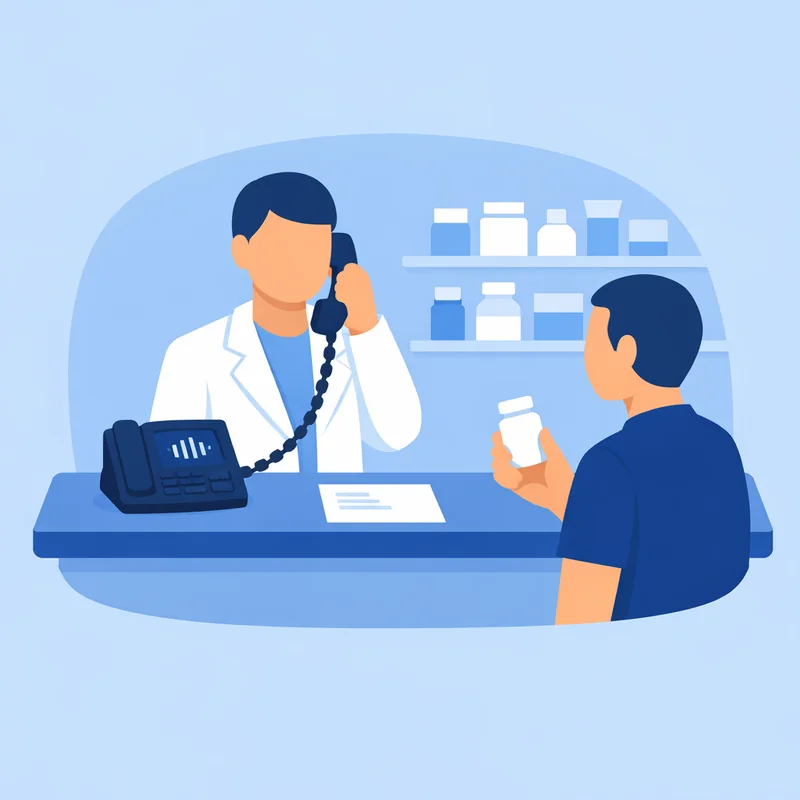
Medication errors are among the most common — and preventable — causes of patient harm. When a patient doesn't understand their pharmacist because of a language barrier, the risk of taking the wrong medication, at the wrong dose, at the wrong time skyrockets. Over-the-phone interpretation (OPI) for pharmacies provides immediate language access at the point of dispensing, ensuring that every patient leaves the pharmacy understanding their medication.
The Stakes of Pharmacy Communication
Medication Errors and Language Barriers
Studies consistently show that LEP patients experience:
Higher rates of adverse drug events — Taking medications incorrectly due to misunderstanding instructions
More emergency room visits — Related to medication problems
Lower medication adherence — Not understanding why or how to take medications
More drug interactions — Failure to disclose other medications because the pharmacist couldn't communicate
Confusion about over-the-counter interactions — Not understanding which OTC products to avoid
A patient who takes two pills twice a day instead of one pill twice a day is experiencing a medication error caused by communication failure.
Legal and Regulatory Requirements
State pharmacy practice acts — Most states require pharmacists to counsel patients on new prescriptions. This counseling is meaningless without language access.
CMS requirements — Medicare Part D and Medicaid programs require that beneficiaries receive information about their medications in a language they can understand.
Title VI — Pharmacies receiving federal financial assistance (including through Medicare/Medicaid reimbursement) must provide meaningful access to LEP patients.
USP (United States Pharmacopeia) — USP guidelines on patient counseling emphasize the importance of effective communication, regardless of the patient's language.
Joint Commission Medication Management Standards — For hospital and health system pharmacies, the Joint Commission requires effective communication about medications.
Pharmacy OPI Use Cases
New Prescription Counseling
When a patient picks up a new medication, the pharmacist must explain:
What the medication is for — The condition being treated
How to take it — Dosage, frequency, timing (with food? on an empty stomach? at bedtime?)
Duration — How long to take the medication
Side effects — Common and serious side effects to watch for
Interactions — What to avoid (certain foods, alcohol, other medications, supplements)
Storage — Refrigeration requirements, light sensitivity, child safety
Refills — How many refills remain, when to request refills
What to do if you miss a dose — Take it immediately? Skip it? Double up?
OPI enables this entire counseling session in the patient's language, typically adding only 3-5 minutes to the encounter.
Refill Counseling
Even for refills, brief counseling is valuable:
"Are you having any problems with the medication?", "Have you noticed any side effects?", "Are you taking it as prescribed?", and "Have you started any new medications since your last refill?"
OPI makes these quick check-ins possible.
Over-the-Counter (OTC) Guidance
LEP patients often need help selecting OTC medications:
- Cold and flu remedies (many contain ingredients that interact with prescription drugs)
- Pain relievers (distinguishing between acetaminophen, ibuprofen, and aspirin)
- Allergy medications (drowsy vs. non-drowsy)
- Diabetes supplies (glucose meters, test strips, insulin syringes)
- First aid products
OPI helps pharmacists guide LEP patients to appropriate OTC choices while warning about interactions.
Immunizations
Pharmacies increasingly provide vaccinations:
COVID-19 vaccines, Flu shots, Shingles (Shingrix), Pneumonia (Prevnar, Pneumovax), Tdap, and HPV
Informed consent for immunizations requires that the patient understands what they're receiving, potential side effects, and contraindications. OPI enables this consent process.
Medication Therapy Management (MTM)
MTM is a comprehensive review of all medications a patient takes:
Identifying duplications, interactions, and unnecessary medications, Assessing whether medications are achieving their goals, Recommending changes to the prescriber, and Educating the patient on their medication regimen
MTM sessions typically last 30-60 minutes. OPI enables thorough review with LEP patients.
Specialty Pharmacy
Specialty pharmacies that dispense high-cost, complex medications (biologics, chemotherapy, HIV antiretrovirals, hepatitis C treatments) need OPI for:
Complex administration instructions (injections, infusions, inhalation devices), REMS (Risk Evaluation and Mitigation Strategies) counseling, Prior authorization communication, Side effect monitoring and management, and Copay assistance program enrollment
Drive-Through Pharmacy
Many prescriptions are picked up at drive-through windows:
- OPI works perfectly through a phone at the drive-through
- The pharmacist calls the OPI number while the patient waits at the window
- Counseling happens through the drive-through speaker system or by passing a phone to the patient
OPI Implementation for Pharmacies
Retail Pharmacy Setup
At the counter:
- Post the OPI access number at every pharmacy counter position
- Use a phone with speakerphone capability or a handset that can be passed to the patient
- Have the OPI number saved as a speed dial on the pharmacy phone
In the consultation room:
- For private counseling (HIV medications, psychiatric medications, MTM), use OPI in the consultation room
- Keep a phone and the OPI access information in the consultation room
Drive-through:
- Have OPI access at the drive-through window phone
- Some pharmacies keep a portable phone with OPI pre-programmed for drive-through use
Hospital Pharmacy
Hospital pharmacists use OPI for:
Inpatient medication counseling, Discharge medication education, Anticoagulation clinic visits, Pharmacy-led medication reconciliation, and Investigational drug (clinical trial) consent
Mail-Order and Telepharmacy
Mail-order pharmacies and telepharmacy services are inherently phone-based:
- OPI integrates directly into phone consultations
- When LEP patients call with questions about mailed medications, OPI provides immediate assistance
- Telepharmacy in rural areas serves diverse populations that may lack local pharmacies with bilingual staff
Best Practices
Timing
The best time for OPI counseling is at the point of dispensing — when the patient is picking up the medication:
The pharmacist has the medication in hand and can reference the label, The patient can ask questions before leaving, and The information is immediately applicable
Don't wait for patients to call back with questions. Proactive counseling at pickup prevents errors.
Use of Visual Aids
While OPI is audio-only, pharmacists can combine it with visual aids:
Pictogram labels — Labels with pictures showing "take with food," "do not crush," or "take at bedtime" bridge the language gap visually
Medication guides — FDA-required medication guides in the patient's language (when available)
Demonstration — Show the patient how to use an inhaler, EpiPen, or insulin pen while the OPI interpreter explains verbally
Confirming Understanding
The "teach back" method works well through OPI:
- Pharmacist explains the medication through the interpreter
- Pharmacist asks: "Can you tell me how you're going to take this medication?"
- The patient repeats the instructions in their own words
- The interpreter relays the patient's response
- The pharmacist corrects any misunderstandings
Language Identification
Pharmacies should:
- Record the patient's preferred language in the pharmacy system
- Flag LEP patients so pharmacists know to use OPI before the patient arrives at the counter
- Use "I Speak" language identification resources when the language is unknown
Documentation
Document OPI counseling in the pharmacy system:
Language used, Topics covered (new medication counseling, refill check, MTM), Interpreter ID (if the platform provides one), Any patient concerns or questions raised, and Pharmacist's assessment of patient understanding
Cost Effectiveness
OPI Cost for Pharmacies
Average OPI usage per LEP patient encounter:
New prescription counseling: 3-7 minutes = $3-$15
Refill check-in: 1-3 minutes = $1-$6
MTM review: 30-60 minutes = $30-$120
Immunization consent: 2-4 minutes = $2-$8
Cost of NOT Using OPI
Medication errors — A preventable adverse drug event costs $2,000-$10,000+ to treat
ER visits — An ER visit due to medication mismanagement costs $500-$3,000+
Readmissions — Hospital readmissions due to medication non-adherence cost thousands
Liability — A malpractice claim for failure to counsel can cost far more than years of OPI
Regulatory penalties — Failure to provide language access can result in fines and sanctions
Pharmacy Reimbursement
- MTM services are billable under Medicare Part D
- Some Medicaid programs reimburse for pharmacy counseling
- 340B pharmacies serving safety-net populations can often justify OPI as a program cost
Link Translations Pharmacy OPI
Link Translations provides over-the-phone interpretation for pharmacies:
- 200+ languages available on demand 24/7
- Average connection under 60 seconds
- Interpreters trained in pharmaceutical terminology
- HIPAA-compliant service
- No minimum call duration — pay only for minutes used
- Affordable rates suitable for per-prescription use
- Contact us to set up OPI for your pharmacy