Over-the-phone interpretation — known as OPI — is one of the most widely used language access solutions in the United States. From hospitals and courts to insurance companies and government agencies, OPI provides instant access to professional interpreters through a simple phone call. This guide covers everything you need to know about OPI: how it works, when it's the right choice, and how to get the best results.
How Over-the-Phone Interpretation Works
OPI is exactly what it sounds like: a professional interpreter joins a phone call to facilitate communication between two parties who don't share a common language.
The Process
- Dial the OPI access number — Your organization receives a dedicated phone number or access code
- Enter your credentials — An account ID, PIN, or department code identifies your organization
- Specify the language — Tell the operator or automated system which language you need
- Connect to an interpreter — The system routes your call to an available interpreter in that language
- Begin the conversation — The interpreter facilitates back-and-forth communication
- End the call — Hang up when the conversation is complete
For high-demand languages like Spanish, Mandarin, and Arabic, connection times are typically under 30 seconds. Less common languages may take 1-3 minutes.
Three-Way Calling
The standard OPI setup is a three-way call:
You (the English-speaking provider or professional)
The interpreter (connected remotely)
The LEP individual (in person with you, on another line, or on speakerphone)
In most settings, the LEP individual is physically present with the provider, and the phone is on speaker or the handset is passed back and forth.
Dual-Handset Phones
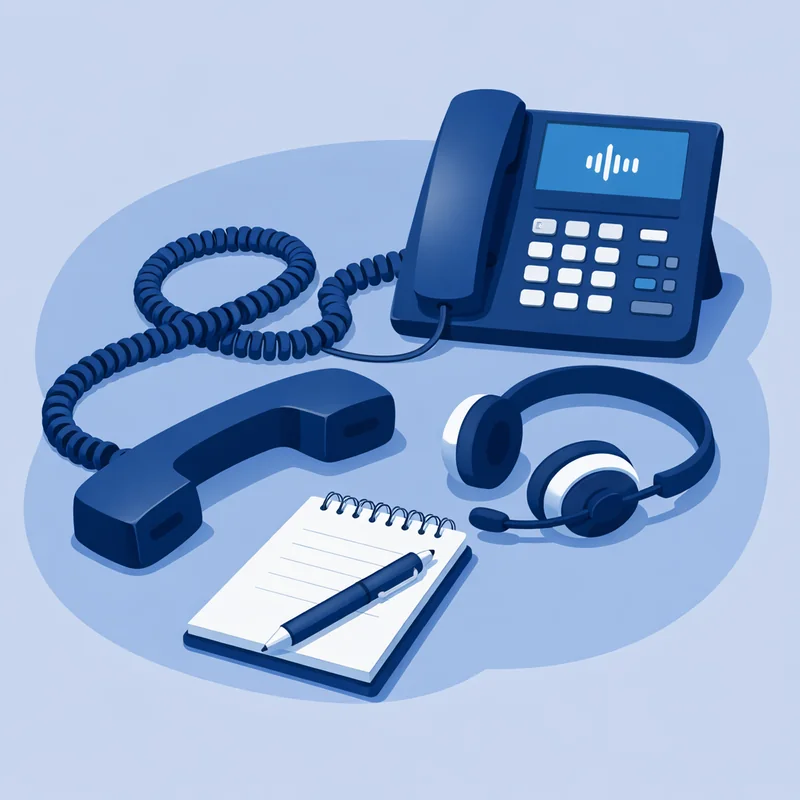
Some organizations — particularly hospitals and clinics — use dual-handset phone systems specifically designed for OPI. These phones have two handsets connected to one base, allowing the provider and patient to each hold a handset while the interpreter speaks through both.
When OPI Is the Right Choice
Short Interactions
OPI is ideal for conversations that take 15 minutes or less:
Scheduling appointments, Confirming basic information (name, address, date of birth), Providing directions or instructions, Answering simple questions, Triage and initial assessment in emergency rooms, and Pharmacy prescription pickup instructions
Urgent Situations
When you need an interpreter right now:
Emergency room intake, 911 and emergency dispatch, Crisis hotline calls, Law enforcement encounters in the field, and Urgent customer service issues
Rare Languages
Not every city has a Tigrinya, Marshallese, or Chuukese interpreter available in person. OPI removes geographic barriers and connects you to interpreters in 200+ languages regardless of where you are.
Phone-Based Services
When the LEP individual is already on the phone:
Customer service call centers, Insurance claims by phone, Benefits enrollment calls, Telehealth triage lines, and Appointment scheduling
Backup for Failed VRI
When video remote interpretation fails due to connectivity issues, OPI serves as a reliable fallback since it requires minimal bandwidth.
When OPI Is Not the Best Choice
Complex or Lengthy Conversations
For conversations over 30-45 minutes, consider VRI or in-person interpretation. Phone fatigue — the strain of concentrating on audio-only communication for extended periods — affects both the interpreter and the participants.
Situations Requiring Visual Cues
OPI interpreters cannot see:
Facial expressions or emotional reactions, Physical symptoms or injuries, Documents, forms, or diagrams, Sign language or gestures, and The environment or context
If visual information is important, video remote interpretation or in-person interpretation is more appropriate.
Highly Sensitive Conversations
Certain conversations benefit from the human presence of an in-person interpreter:
End-of-life discussions, Sexual assault forensic exams, Child abuse disclosures, Mental health crisis intervention, and Death notifications
Group Settings
OPI is designed for two-party conversations. Meetings, conferences, or group discussions with multiple LEP individuals are better served by in-person or VRI.
Industries That Rely on OPI
Healthcare
OPI is the workhorse of hospital language access programs:
Emergency departments — ERs are fast-paced and unpredictable. OPI provides immediate access to interpreters without waiting for an in-person interpreter to arrive. Triage nurses use OPI to assess patients within minutes of arrival.
Primary care clinics — Quick questions, prescription refills, test result notifications, and follow-up calls use OPI efficiently.
Pharmacies — Medication counseling and prescription instructions via OPI help pharmacists communicate with LEP patients.
Discharge instructions — Nurses use OPI to explain discharge instructions, medication schedules, and follow-up appointment details.
Telehealth — Phone-based telehealth appointments can integrate OPI seamlessly by conferencing in an interpreter.
Insurance
Insurance is one of the heaviest users of OPI:
Claims reporting and processing, Policy explanations and enrollment, Benefits inquiries, Prior authorization calls, and Appeals and grievance discussions
Many state insurance regulations require language access for policyholders. OPI is the most practical way to comply across hundreds of languages.
Banking and Finance
Banks and credit unions use OPI for:
Account inquiries and transactions, Loan applications and closings, Fraud reporting, Collection calls, and Compliance discussions (Know Your Customer, anti-money laundering)
Government Services
Federal, state, and local agencies rely on OPI for:
Social services (SNAP, TANF, WIC enrollment), Unemployment insurance claims, Child protective services calls, Veterans Affairs services, and Tax assistance hotlines (IRS provides OPI for many languages)
Legal
Attorneys and legal aid organizations use OPI for:
Initial client intake calls, Brief status updates, Court date reminders, and Simple procedural questions
For more substantive legal discussions, VRI or in-person interpretation is preferred.
911 and Emergency Services
911 dispatch centers across the country use OPI to communicate with callers who don't speak English. Every second counts:
Average connection time must be under 30 seconds, Interpreters must be trained in emergency protocols, The system must operate 24/7/365 without interruption, and Interpreters must handle high-stress, life-threatening situations calmly
Many 911 centers have direct lines to OPI providers that bypass the standard access code process for faster connection.
OPI Best Practices
For the Provider
Speak directly to the person, not the interpreter — Say "What is your name?" not "Ask her what her name is."
Use short, clear sentences — Long, complex sentences are harder to interpret over the phone.
Pause after each sentence — Give the interpreter time to interpret. Don't speak for several minutes and then expect the interpreter to remember everything.
Avoid jargon when possible — If you must use technical terms, be prepared to explain them.
Confirm understanding — Ask the LEP individual to repeat back important information (through the interpreter) to confirm comprehension.
Identify yourself — At the start of the call, tell the interpreter your name, title, and the purpose of the call.
For the Organization
Train all staff — Every employee who interacts with the public should know how to access OPI services. Post the access number and instructions in visible locations.
Test regularly — Periodically test your OPI system to ensure it's working correctly and that staff remember how to use it.
Have backup numbers — If your primary OPI provider experiences an outage, have a secondary provider's number available.
Track usage — Monitor OPI usage by department, language, and call duration to identify trends, allocate resources, and negotiate better rates.
Gather feedback — Ask staff and patients/clients about their OPI experience to identify areas for improvement.
OPI Cost Structure
OPI is typically billed per minute:
Spanish: $0.80 - $2.00 per minute (high volume = lower rates)
Common languages (Mandarin, Arabic, French, Portuguese): $1.00 - $2.50 per minute
Less common languages (Hmong, Somali, Karen): $1.50 - $3.50 per minute
Rare languages (Marshallese, Chuukese, indigenous languages): $2.50 - $5.00+ per minute
Volume discounts are standard. Organizations using thousands of minutes per month negotiate significantly lower rates.
Cost Comparison
For a 15-minute encounter:
| Service Type | Estimated Cost |
|---|---|
| OPI | $15-$45 |
| VRI | $22-$60 |
| In-Person (1-hour minimum) | $75-$200+ |
OPI is clearly the most economical choice for short interactions.
Getting Started with OPI
Link Translations provides professional over-the-phone interpretation services for organizations of all sizes:
- 200+ languages available on demand
- Average connection time under 60 seconds
- 24/7/365 availability
- No minimum call duration
- Competitive per-minute rates with volume discounts
- Dedicated account management
- Usage reporting and analytics
- Get a free quote to set up OPI for your organization