If you've ever needed a certified translation for immigration, legal, or academic purposes, you've likely encountered the term "Certificate of Accuracy." This document accompanies every certified translation and is essential for official acceptance. Here's everything you need to know about what it is, who signs it, and why it matters.
Definition
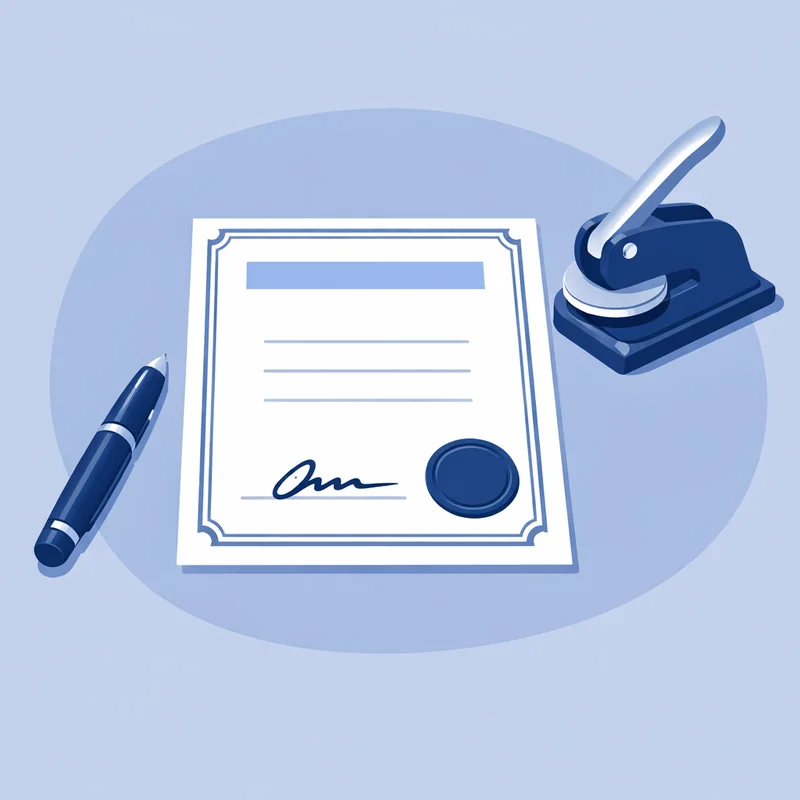
A Certificate of Accuracy (also called a Certificate of Translation Accuracy, Certification Statement, or Translator's Certification) is a signed statement by the translator or translation company attesting that:
- The translation is a true, accurate, and complete rendering of the original document
- The translator is competent to translate from the source language into the target language
- The translation was performed to the best of the translator's ability
This certificate transforms a regular translation into a "certified translation" — a document that courts, government agencies, and educational institutions will accept as an official English version of the foreign-language original.
What Does a Certificate of Accuracy Contain?
A proper Certificate of Accuracy includes:
Required Elements
Statement of accuracy — A declaration that the translation is true, complete, and accurate
Source language and target language — Identification of the languages involved
Document identification — Description of the document translated (e.g., "Birth Certificate of Juan García, issued by the Civil Registry of Mexico City")
Translator's signature — Original (wet) signature or authorized electronic signature
Translator's printed name — Full legal name of the translator
Date of certification — The date the certificate was signed
Translator's qualifications — Statement of competency (e.g., "I am fluent in both Spanish and English")
Additional Elements (Recommended)
Translator's contact information — Address, phone number, or email Company name (if applicable) — The translation company that produced the translation
Number of pages — Total pages translated
Certification number — A unique reference number for tracking
USCIS Requirements
The United States Citizenship and Immigration Services (USCIS) has specific requirements for certified translations. According to 8 CFR 103.2(b)(3):
"Any document containing foreign language submitted to USCIS shall be accompanied by a full English language translation which the translator has certified as complete and accurate, and by the translator's certification that he or she is competent to translate from the foreign language into English."
Key USCIS Points
- USCIS does not require the translator to be certified, licensed, or registered — only that they certify their own competence
- The translator does not need to be a U.S. citizen or resident
- USCIS does not accept machine translations (Google Translate, etc.), even with a Certificate of Accuracy
- USCIS does not require notarization of the translation (although some applicants choose to notarize for additional assurance)
- The translator cannot be the applicant, petitioner, or beneficiary — i.e., you cannot translate your own documents
Court Requirements
Courts have their own standards for certified translations:
Federal Courts
Federal courts generally follow the Federal Rules of Evidence. A certified translation may be admitted as evidence if: It is accompanied by a Certificate of Accuracy, The translator is available to testify if challenged, and The opposing party has had the opportunity to review the translation
State Courts
State court requirements vary. Some states: Require the translator to be a court-certified interpreter/translator, Require notarization of the Certificate of Accuracy, Have specific forms or formats for the certificate, and May require the translator to appear in court to authenticate the translation
Best Practice
If you need a translation for court use, ask the attorney or court clerk about specific requirements before ordering the translation.
Certificate of Accuracy vs. Notarization
These are two different things:
Certificate of Accuracy (Certification)
Who provides it: The translator or translation company
What it says: The translation is accurate and the translator is competent
Legal weight: Constitutes a "certified translation" for most purposes
Cost: Included in the translation fee
Notarization
Who provides it: A notary public
What it says: The person who signed the certificate (the translator) appeared before the notary and swore to the truth of their statement
Legal weight: Adds an additional layer of authentication
Cost: Additional fee (typically $10-$25 per document)
When Is Notarization Needed?
- USCIS: Not required (certification alone is sufficient)
- Most courts: Not required but may be recommended
- Some state agencies: May require notarization
- International use: Sometimes required along with apostille
- Real estate: Often required
Certificate of Accuracy vs. Apostille
An apostille is a different type of authentication:
- Apostille: A government authentication confirming a public document is genuine. Issued by the Secretary of State's office for documents intended for use in another country (Hague Convention countries).
- Certificate of Accuracy: A translator's statement about the quality of the translation.
In some cases, a translated document needs both: the original document gets an apostille confirming its authenticity, and the translation gets a Certificate of Accuracy confirming its accuracy.
Who Can Sign a Certificate of Accuracy?
Professional Translators
Any professional translator who is fluent in both the source and target languages can sign a Certificate of Accuracy. There is no federal licensing or registration requirement for translators in the United States.
Translation Companies
The owner, manager, or authorized representative of a translation company can sign on behalf of the company. The certificate typically states the company's credentials and the translator's qualifications.
Who Cannot Sign
The applicant — You cannot certify your own translation
Family members of the applicant — While USCIS doesn't explicitly prohibit this, it's strongly discouraged and may raise credibility concerns
Unqualified individuals — Anyone who is not truly competent in both languages should not sign
Red Flags: What Makes a Certificate of Accuracy Insufficient?
Watch out for these problems:
Missing signature — The certificate must be signed
No statement of competency — The translator must affirm their qualifications
Machine translation — A Certificate of Accuracy for a Google Translate output is fraudulent
Vague document identification — The certificate should identify the specific document translated
Missing dates — Both the translation date and certification date should be present
No contact information — The reviewing authority should be able to reach the translator if needed
Common Mistakes to Avoid
Mistake 1: Using a Template Without Customization
Generic templates found online may not include all required elements. Each Certificate of Accuracy should be tailored to the specific document and purpose.
Mistake 2: Self-Translation with a Certificate
Some individuals translate their own documents and attach a generic Certificate of Accuracy. This violates USCIS requirements and can result in application denial.
Mistake 3: Confusing Certification with ATA Certification
"ATA-certified translator" refers to a translator who has passed the American Translators Association certification exam. This is a professional credential. A "certified translation" with a Certificate of Accuracy does not require an ATA-certified translator — though using one adds credibility.
Mistake 4: Multiple Documents, One Certificate
Each translated document should have its own Certificate of Accuracy. A single certificate covering multiple documents may be rejected.
Link Translations Certificate of Accuracy
Every certified translation from Link Translations includes:
A comprehensive Certificate of Accuracy with all required elements, Unique certification reference number for verification, Clear identification of the translated document, Translator's statement of competency, Option for notarization at additional cost, and Compliance with USCIS, court, and institutional requirements
Request your certified translation today and receive a professional Certificate of Accuracy with every order.