Dialect Matching Is Critical
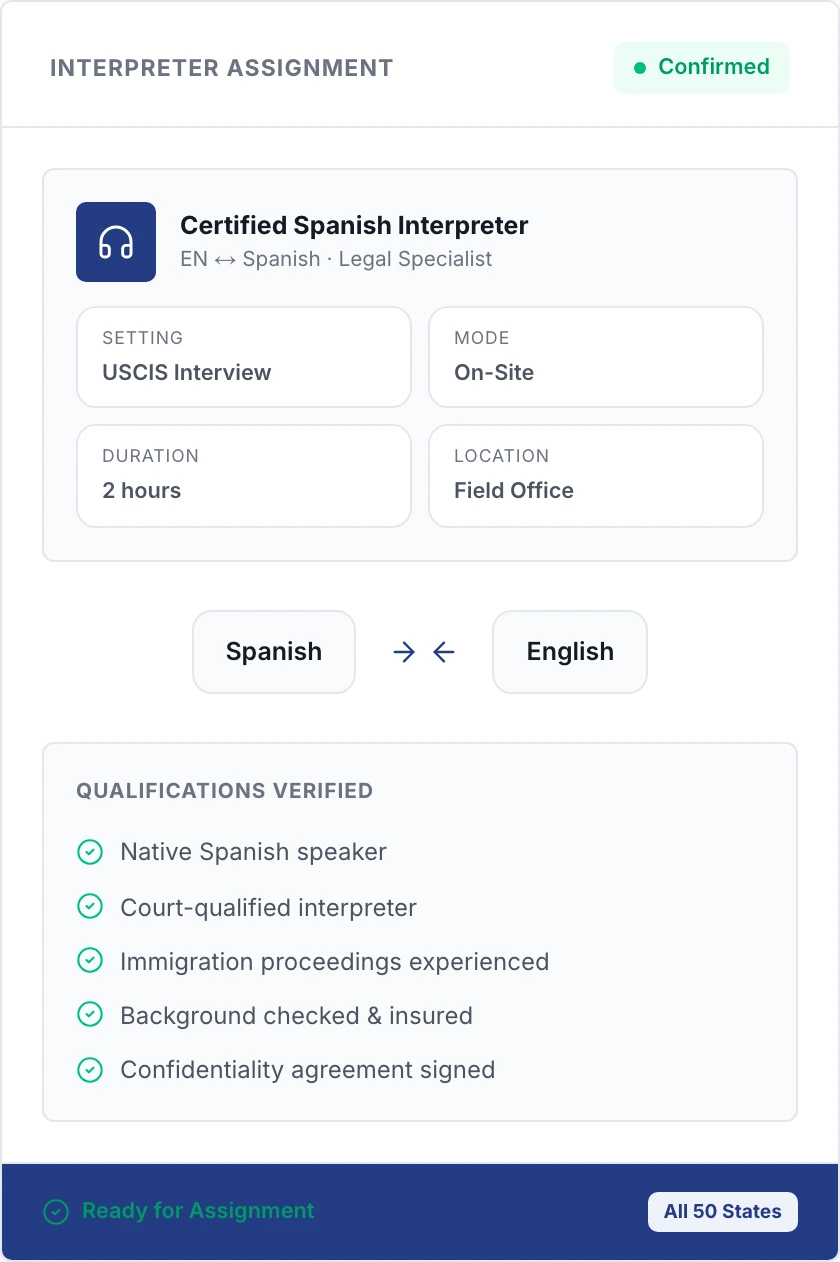
A Mexican respondent in immigration court may struggle to understand an interpreter speaking Argentine Spanish. Legal terms differ by country — "declaración jurada" vs. "affidávit," "apoderado" vs. "representante legal." Our interpreters are dialect-matched to ensure the parties understand every word, which is especially critical in asylum interviews and depositions where nuance determines outcomes.
Legal Register & Courtroom Protocol
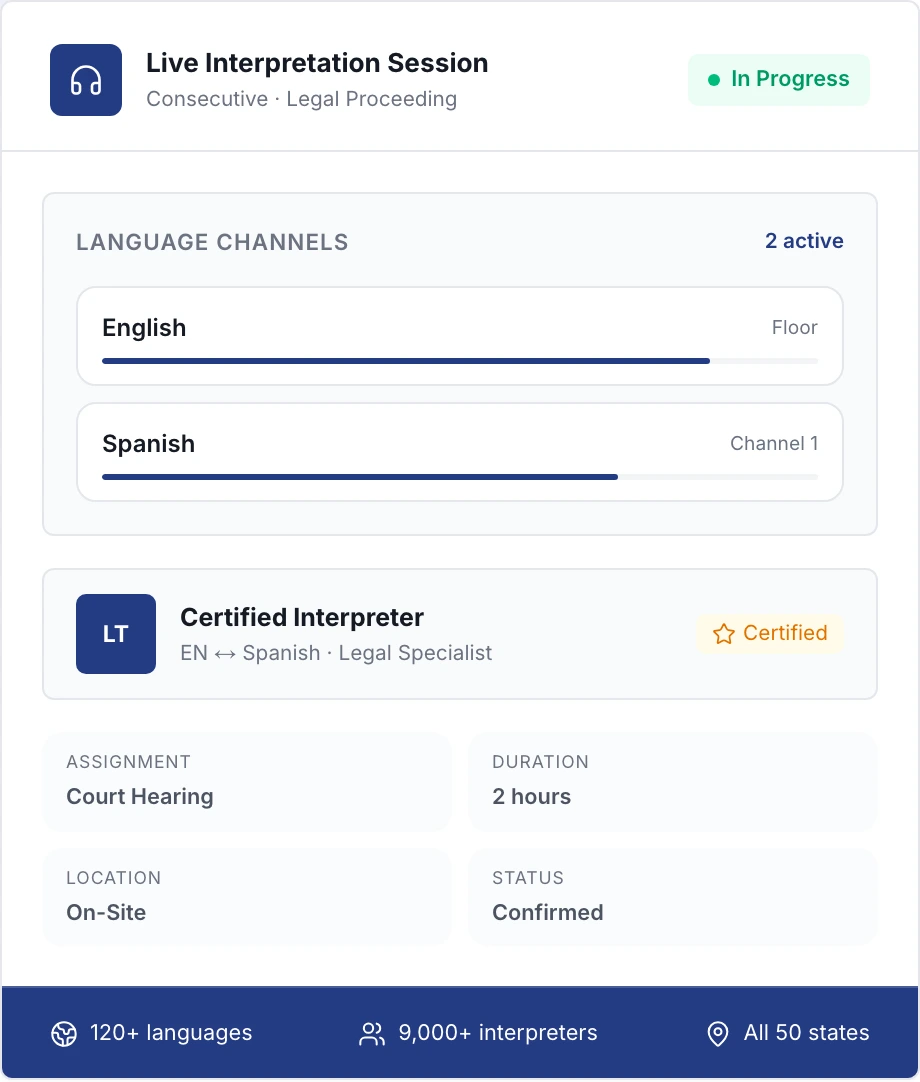
Spanish legal interpretation requires mastery of both U.S. and Latin American legal systems. Terms like "arraignment," "plea bargain," and "motion to suppress" have no simple Spanish equivalents — they require precise explanatory interpretation. Our interpreters are trained in federal and state court protocols and maintain appropriate register throughout proceedings.
Medical Terminology Across Specialties
Healthcare interpretation demands fluency in anatomy, pharmacology, and clinical procedures. A cardiologist explaining "atrial fibrillation" or a psychiatrist discussing "involuntary commitment" requires an interpreter who can convey exact medical meaning without simplification. Our medical interpreters hold certifications (CMI, CHI) and specialize by medical discipline.
Cultural Mediation & Sensitive Topics
Many Spanish-speaking clients come from cultures where discussing mental health, domestic violence, or immigration status carries stigma. Skilled interpreters serve as cultural bridges — maintaining neutrality while ensuring the speaker's meaning is fully conveyed. This is particularly critical in asylum cases involving persecution, gender-based violence, or gang threats.